
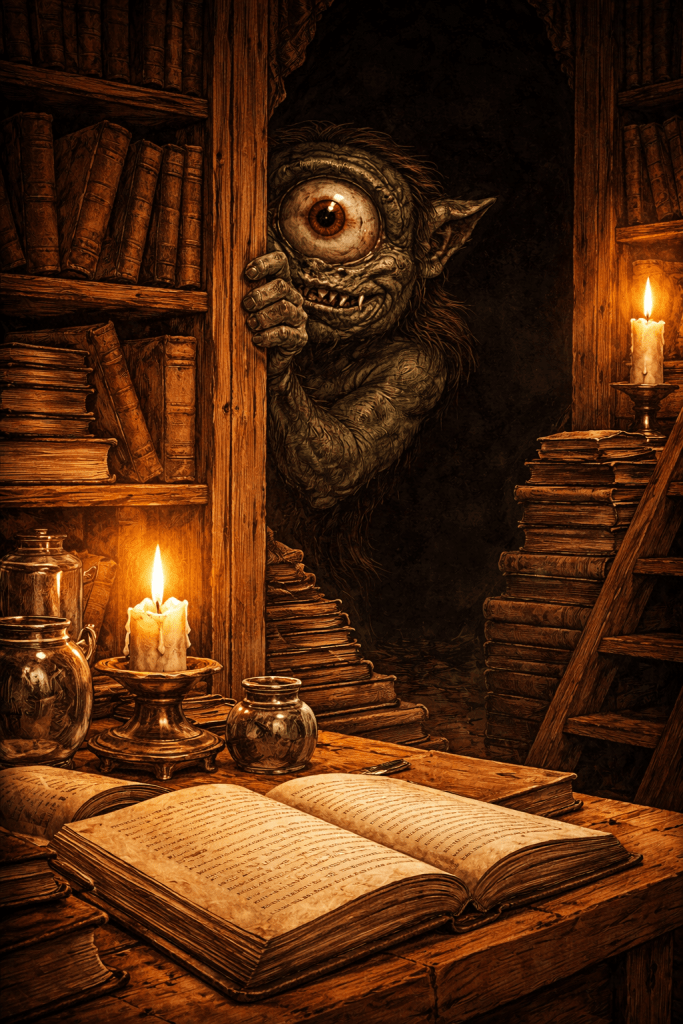
I have a muse. This muse isn’t human. I wouldn’t call it ‘human’, anyway.
It believes itself to be a source of artistic inspiration—which, of course, is the function of a true muse—the fostering of creativity. This thing, however, is a far cry from any kind of encouraging force. Rather, it just hangs around and haunts me. It’s not terribly intelligent, and its input is usually more sarcastic than inspiring.
And for whatever diabolical reason, it thinks it belongs to me.
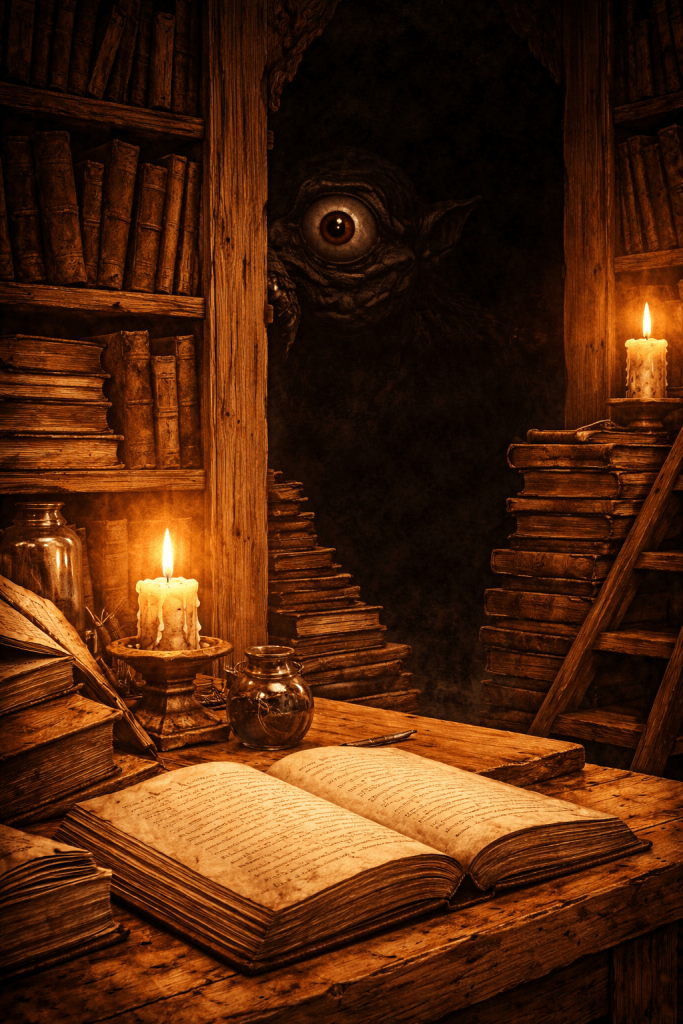
S.M. (for Snarky Muse): Tell us about your latest work.
Me: Well, it’s called Purple Bleed Naughty Beasts. It’s a stand-alone story, but it follows the three survivors of the ordeal that took place in the first book, called Project Purple. The color purple, here, is the blending of red and blue that forms a majority of US political thought.
S.M. Hence, the naughty beasts.
Me: The main character, Henrietta, who is referred to in the first story as the goatwench, calls the sometimes-unruly goats in her charge naughty beasts, and the title of the second book is an extension of those sentiments.
S.M: So, Americans bleed purple?
Me: (nodding) It’s a poetic way to say that Americans, despite their beliefs, are all the same inside. We are human. We bleed the same way.
S.M: I’d call the imagery more violent than poetic.
Me: Well, the first story is about raw survival. This second story is more about the cyclical nature of human history—how we progress to a certain point, only to fall back, destroying ourselves in senseless hatred and warfare. It’s loosely structured on a classic science fiction book called A Canticle for Leibowitz by Walter Miller. If you remember that story, you can see similar plot devices and characters. And the message is, of course, the same. Martin Luter King said, “Over the bleached bones and jumbled residues of numerous civilizations are written the pathetic words: Too late.”
S.M: Yeah … So, why are you stealing the ideas of someone else?
Me: It’s an homage to a great story. When reading Canticle as an eighteen-year-old in a college science fiction class, I recall being stunned by what happens to the protagonist in the story.
S.M: I know I’m not an author—I’m just a muse. But I think killing your protagonist half way through the story is probably something no one is going to recommend you do in any writing seminars.
Me: I break rules. In Canticle, no character really picks up the slack to resume the mantle of lead character. But in my story, Reygil steps up and we follow him and his journey for answers in a post-apocalyptic world some thirty years later.
S.M: Where do you go during a zombie apocalypse? — The living room … Get it?
Me: There are no zombies, but the ruin of humanity we can see beginning in the first book; there are traces of what’s called ‘the rot’. In the second book, the rot explodes onto the scene with frenzied killings in the Capital Building; a rabid-like fever of hatred.
S.M: Our politicians slaughter each other — What’s not to like? … And what about the worms?
Me: Worms are, of course, an associative metaphor for the rot, the meek inheriting the Earth, superseding humanity — or at least giving humans a good run for their money; the earth cleansing itself of the virus of humanity. T.S. Eliot said, “This is the way the world ends. Not with a bang but a whimper.”
S.M: Whatever, dude … There’s a lot of church stuff in this story. What’s up with that?
Me: In Canticle, the Catholic Church plays a large role in the affairs of state. And it’s a monastery of monks that preserve history. Scientific discoveries are also, once again, made in the monastery. “And we danced, on the brink of an unknown future, to an echo from a vanished past.” … That’s John Wyndham from The Day of the Triffids.
S.M. (rolling its one eye) I’m really impressed with your quotation. Let’s wrap this turkey up: What’s next for you?
Me: Good question. I had to finish Henrietta’s story. It felt incomplete. I can now go back to what I’m happiest doing—what I can really call comic fantasy, the adventures of Pinky Bell, coming out in autumn or this year, 2026.
S.M: That’s two books published in one year. Maybe you should slow the haste down a bit.
Me: I’m on a roll. Thanks to my muse.
S.M. (blushing a saccharine pink) Yeah, that’s what I do. I come from the nine ancient Greek goddesses of literature, science, and arts.
Me: (leaving the room) I was being sarcastic.
S.M: I’m your mental spark, buddy! I fuel your creativity! … I’M HIGHLY RESPECTED!
Fade out …..
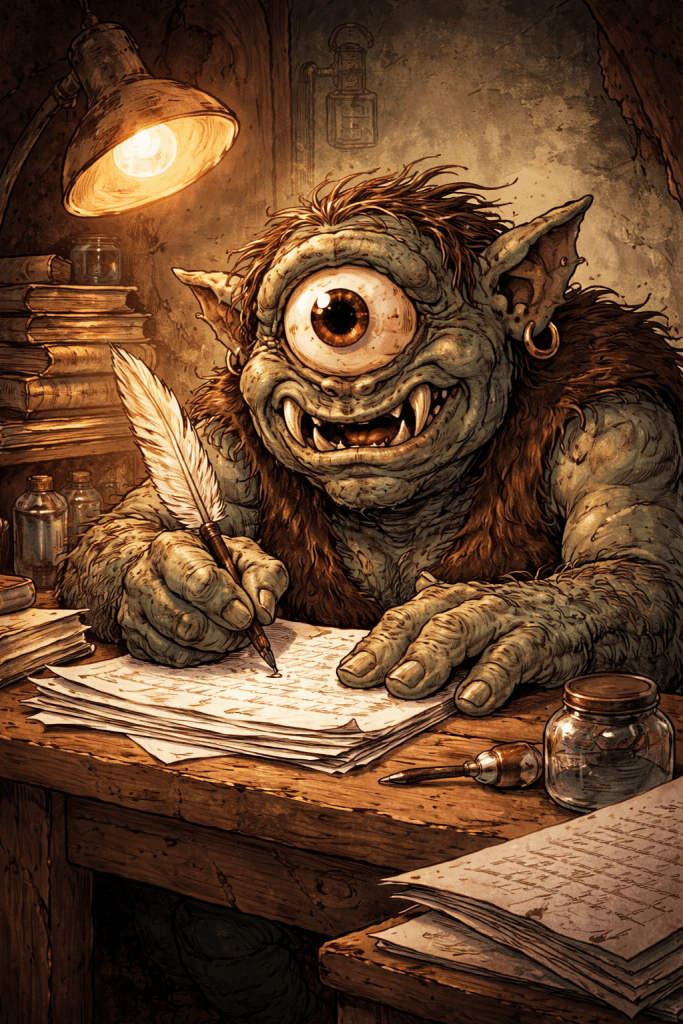
self portrait
 Michael A. Greco